DSS by Caredo — a product we build together with the Caredo team
We build the whole DSS product together with the Caredo team — from the CRM and planner to the software behind the key lockers and totems.
Read the case study
A dealership has the manufacturer's system it cannot change, a spreadsheet that covers what the system lacks, and an inbox where everything else gets settled.
Customer service works despite that arrangement, not because of it.
A dealer doesn't choose the importer's system and cannot extend it.
Everything missing from it — service campaigns, lead handling, commission accounting — gets built alongside, in tools that don't talk to each other.
Customer data sits in three sources, so the monthly summary is produced by exporting, copying and stitching.
It costs several days of work and is out of date on the day it lands.
An enquiry arrives by email, by phone or from a listings portal.
Without a single register, nobody knows who took it, whether anyone called back, or why the customer bought elsewhere.
The same person is one record in service and another in sales.
Repair history doesn't flag the moment to offer a replacement, and a salesperson calls somebody who has just collected their car from the workshop.
The customer, their history, bookings and internal processes as a single record rather than three.
That is how the CRM we build in DSS by Caredo works — connected to the planner and to the devices on site.
Summaries built from the data in the system, at the moment the view is opened.
No exports, no manual stitching, no waiting until the fifth of the month.
The manufacturer's system stays where it is — we build the layer that reads from it and fills the gaps.
The dealer avoids a conflict with the importer and stops entering data twice.
Service slots offered from actual workshop availability, not from a contact form somebody then has to transcribe.
We build the whole DSS product together with the Caredo team — from the CRM and planner to the software behind the key lockers and totems.
Read the case studyBecause a dealer doesn't control the most important system in their own company. Every project therefore starts with the question of what can be built alongside rather than instead — and that question has a different answer at every importer.
The second reason is seasonality and staff turnover. A system that takes a week to learn will not survive the first peak, which is why in this industry a disproportionate share of the effort goes into making a screen understandable without training.
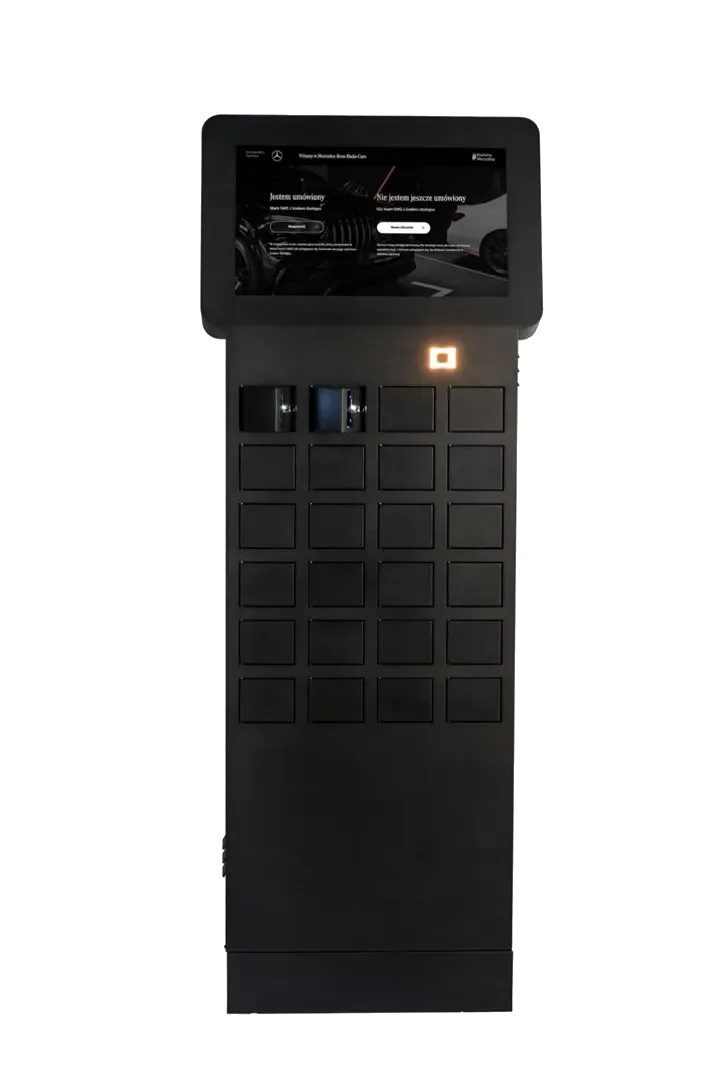
Together with the Caredo team we build DSS by Caredo — a management system for dealerships and service centres: the CRM, the planner, the key handover system and the integrations for the key lockers, parts dispenser and parking totem. For Mercedes-Benz, Porsche, Renault and Kia dealers we build those devices' interfaces in the brand's identity. The product website, dssbycaredo.com, we built entirely ourselves. The case study is below.
That depends on what the importer exposes — and it is the first thing we check before quoting anything. Sometimes there is an API, sometimes a file export, sometimes only a screen. Each of those is a different scope and a different price, so committing to an integration before checking would be guesswork.
One, split by location with per-branch permissions. The number of roles and who sees what is the main cost driver in systems like this — which is why we settle it in the workshop rather than during the build.
Yes. Infrastructure is set up on your accounts, and where personal data is involved we sign a data processing agreement. Production access on our side is named and granted only for as long as it takes to diagnose a specific problem.
The first call is free. We reply within one business day.