
System integrations and APIs
Your systems stop being islands
The most expensive integration is the one a person performs — copying data from one window to another, every day, with mistakes.
Who it's for
- Companies where the same information is entered by hand into two systems
- Online stores whose stock levels drift out of sync
- Taxpayers who must issue invoices through KSeF and have no mechanism for it
What you get
ERP and accounting integrations
Documents, contacts and payments flow automatically, with error handling and a retry queue instead of records silently going missing.
E-commerce and marketplaces
Stock, prices, orders and shipping statuses synced both ways, with conflict resolution.
KSeF rollout
Issuing and receiving structured invoices, authentication, rejection handling and UPO archiving.
Custom APIs
We design and document APIs your partners and clients can plug into without your involvement.
Data exchange monitoring
An alert when synchronisation stops working — before you hear about it from a client.
Narrower scopes within this service
If you already know exactly what you need, the pages below describe it directly.
- KSeF integration — e-invoicing in your own systemAuthentication, the FA format, rejection handling, receipt archiving and the fallback mode. Poland's national e-invoicing system wired into the document flow you already run.
- Connecting your shop to an ERP and marketplacesOne source of stock for the shop, the marketplaces and phone sales. Orders reaching the ERP without being retyped.
How we work
- 01
System inventory
What needs to talk to what, in which direction, how often, and which system is the source of truth for each field.
- 02
Exchange design
Field mapping, conflict rules, error handling and volumes.
- 03
Rollout
Depending on the number of systems and whether they expose a reasonable API.
- 04
Observation
We run in production with heightened monitoring before handing off to maintenance.
Pricing models
Fixed price per integration
A single connection with a known scope — the most common model.
Integration bundle
Several systems at once, quoted together, with a lower rate per additional connection.
SLA retainer
Maintaining working integrations with a guaranteed response time for outages.
See the case study
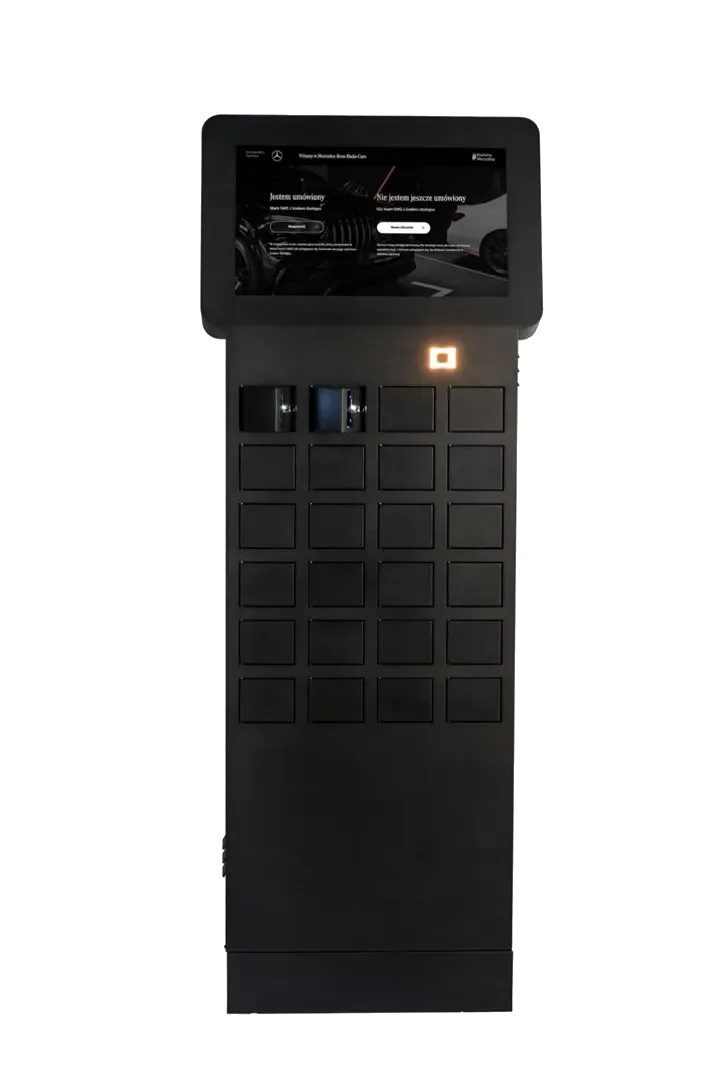
DSS by Caredo — a product we build together with the Caredo team
Frequently asked questions
How much does connecting two systems cost?
A simple connection through a well-documented API is usually PLN 8–20k net. Integrating with a system that has no API, requiring work on files or the database directly, can cost several times more — because the difficulty sits on that system's side, not ours.
What if my system has no API?
What's left is exchange files, database access, or interface automation. Each of those is worse than an API, and we say so directly, because it affects maintenance cost.
How long does a KSeF rollout take?
For a company with its own sales system, usually 3–6 weeks, including testing on the Ministry of Finance's pre-production environment.
What happens when an integration stops working?
Monitoring detects the gap in the exchange and sends an alert. Unprocessed documents wait in a queue and go through once the connection is restored — nothing disappears silently.
Got an idea? Let's talk.
The first call is free. We reply within one business day.